Viewing entries in
Water Filtration

Unboxing Bluevua ROPOT Lite Countertop Reverse Osmosis System

1 Comment

Unboxing Bluevua ROPOT Lite Countertop Reverse Osmosis System

< Back To All Blogs

12/11/2022

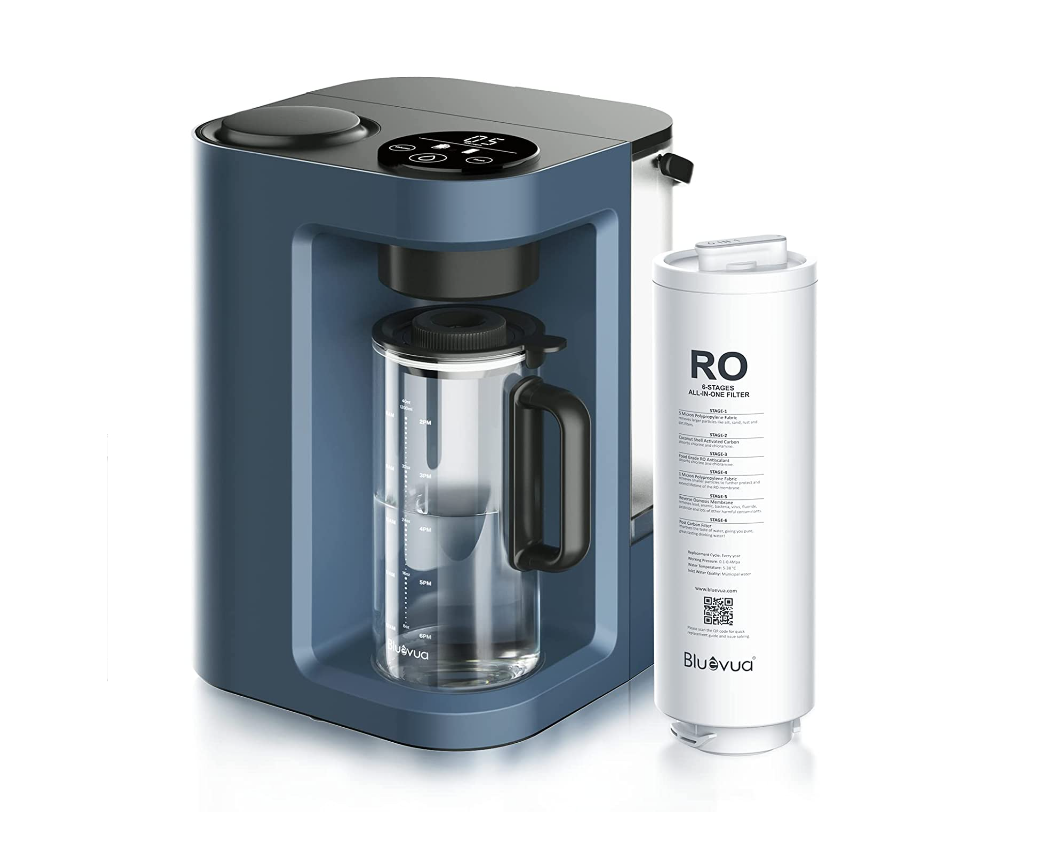
I bought this Bluevua's ROPOT Lite Countertop Reverse Osmosis (RO) System to be able to offer to our water customers a world class countertop RO system that produces excellent drinking water for years to come. We evaluate new systems, and if they pass our rigorous testing then we recommend them to our customers. This countertop RO system is perfect for people who want clean drinking water without having to do any special plumbing under their kitchen sink. It’s the perfect size and it looks nice on your counter. It will generate a lot of interest from your friends and family that see it, and you can take pride knowing you are helping the environment by not having to constantly buy bottled water.

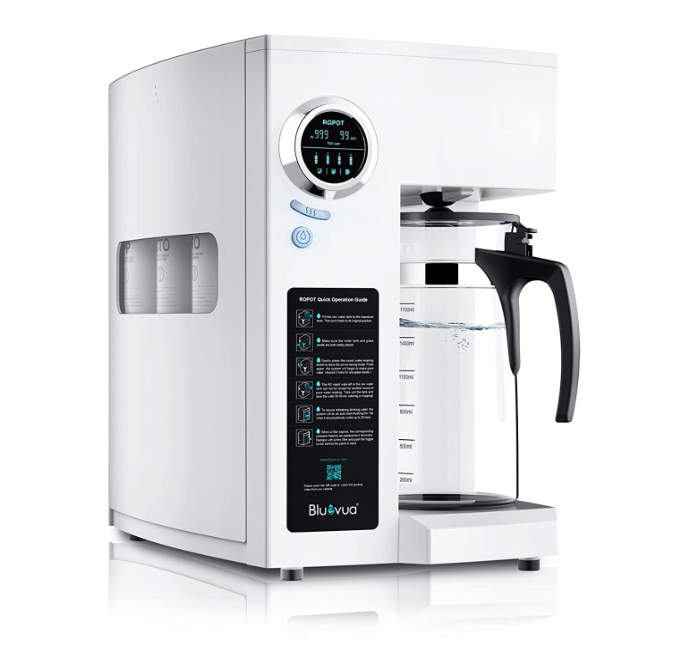
I am absolutely thrilled to own Bluevua's ROPOT Lite Countertop Reverse Osmosis (RO) System.  This system is absolutely streamlined and elegantly designed. The dark blue color adds to the system’s elegance. It has curved, smoothed, and beveled edges which make it look like an expensive countertop RO system. System comes with a 1.2-liter borosilicate glass carafe and a glass infuser for making fruit infused water. Included are six different recipes for making fruit-infused water, and the system setup instructions are written well and easy to follow. This system is slightly smaller from Bluevua’s regular ROPOT system but is it still large enough to make enough RO water for an entire family of 2-3 people.  You simply plug it in, flush the six-stage single filter, and start making clean RO water for the entire family with no plumbing needed!

This countertop RO system has a single filter which has all six stages needed for producing high quality RO water.  The great thing about a single filter is that changing it is a breeze as opposed to the inconvenience of having to change six different filters on a tank RO system.  The first stage is 5-Micron Polypropylene Fabric to remove large particles like silt, sand, rust, and dirt.  The second stage is Coconut Shell Activated Carbon Filter to absorb chlorine and chloramine.  The third stage is a Food Grade RO Antiscalant to eliminate mineral scale to prevent the scaling and fouling of the RO filter membrane.  The fourth stage is a 1-Micron Polypropylene Fabric to remove smaller particles to further protect and extend the lifetime of the RO membrane.  The fifth stage is the Reverse Osmosis Membrane Filter to remove lead, arsenic, bacteria, virus, fluoride, pesticides, and 1000+ other harmful contaminants.  The sixth stage is a Post Carbon Filter to condition and further improve the taste of the water.

The ROPOT Lite RO system has a real-time filtered water quality indicator (e.g. real-time Total Dissolved Solids measurement).  There is a button on the LED interface to pick the volume of water to produce – 1.2L or 0.65L with a water volume indicator.  ROPOT Lite RO system has a filter life indicator, so you know when to change the ROPOT Lite water filter, and there is a manual flush button so you can flush the system when a new filter replacement is installed.

The first time you use the countertop system you need to clean the glass carafe and the water tank with hot water. To clean out the protective liquid in the four filters you need to fill the RO tank to the max level and run the water through the machine 4-6 times. After each time throw the water away in the carafe and repeat the process. During the first two rounds, the raw water in the tank will automatically be filled into the filters, therefore there may be no water coming out in this phase. For the first 3-5 rounds, it is normal that the pure RO water may turn black.

Using this countertop RO system will produce you drinking water with a Total Dissolved Solids (TDS) measurement between 5-15 parts per million (ppm) depending on your water source. This TDS level is the same as excellent quality drinking water you would pay for in the store that is created in a similar way through an industrial reverse osmosis process. Save your money, stop buying bottled water, and protect the environment by investing in the Bluevua ROPOT Lite Countertop Reverse Osmosis System.


1 Comment

How to use a water softener with a water ionizer?

2 Comments

How to use a water softener with a water ionizer?

< Back To All Blogs

7/5/2022

If you have a whole house water softener and you want to be able to use a water ionizer with your water softener you have a couple of different options to make this setup work. Read below to learn more about hard water, city water, well water, softened water, and using an ionizer with a whole house water softener.

What is hard water?

When rainwater falls it is soft water and completely void of minerals. When it is absorbed and flows into the ground the rainwater absorbs minerals like calcium and magnesium. Water that has a lot of minerals in it is considered hard water. Hard water is not harmful to your health, but it is not the best for your home. When hard ground water combined with heat flows through your pipes mineral scale buildup is left behind that can damage your appliances, pipes, and fixtures. The white buildup in the images below is mineral scale buildup, and it’s very hard to remove it without the use of acidic chemicals.

How is well water different from city water?

Some people who live in rural areas away from major cities may have a private well rather than water supplied and treated by a city municipality. Well water does not taste the same as city water, and it may even look and smell different and cause stains. City water is filtered and treated with disinfectants such as chlorine and chloramine. Fluoride and additional minerals (e.g. potassium and calcium) are also added. Well water is not treated with disinfectants, and it comes straight out of the ground. When you own a home with a private well, the safety and quality of the well water is the homeowner’s responsibility.

Well water is typically much harder water (e.g. more minerals) than city water since it comes straight from a well drilled into an underground aquifer. It may contain high amounts of iron which changes the taste of the water and causes hard to remove stains. Well water may contain naturally occurring Volatile Organic Compound (VOC) contaminants such as uranium, radon, and arsenic, which are dissolved in groundwater as it moves through soil and rock into underground aquifers. Irrigation water can carry nitrates down through the soil into groundwater, and nitrates pose a health risk to pregnant mothers and young children. Septic tanks located too close to a private well are another source of possible contamination. These are some of the reasons why testing well water yearly for contamination is important and why proper pre-filtration matters so much.

Typically to treat well water most rural homeowners will often use a water softener + reverse osmosis to remove hard water minerals - calcium, magnesium and iron, and remove VOC contaminants to make the water safe for drinking.

What does a water softener do?

A water softener removes calcium and and magnesium through a process called ion exchange. Calcium and magnesium ions are substituted with sodium ions. The calcium and magnesium stick to the water softener resin beads and are back flushed from the system with each water softener regeneration cycle which cleans the resin beads. Softened water prevents scale or mineral buildup in your pipes, water lines in kitchen appliances and washer, bathtubs, showers and sinks, fixtures and extends the life of your water heater. Other benefits are cleaner hair and softer skin, brighter and softer clothes, cleaner dishes and less time cleaning. Cold soft water also penetrates and dissolves better with soap which means more suds and a deeper lather for your body, clothes, and dishes. Softened water also helps prevent the loss of natural oils in your skin and hair.

As mentioned above water softeners remove mineral ions, but they do not remove contaminants such as bacteria or heavy metals like lead, mercury, or even iron. An excellent prefiltration system is also needed to reduce sodium and remove contaminants so you can drink the water.

Can I drink softened water?

Drinking softened water is not advised because of the high sodium (e.g. salt) content. Important minerals have been removed and substituted for sodium, and you already get more than enough daily salt intake from the food you eat. Americans consume on average about 3,400 milligrams (mg) of sodium per day. However, the dietary guidelines for Americans recommends adults limit sodium intake to less than 2,300 mg per day—that's equal to about 1 teaspoon of table salt!

Other considerations for how much salt is in your softened water completely depends on the hardness of your city or well water. The harder your water, the more sodium that is substituted for the minerals during the water softener ion exchange process.

How do I reduce the Sodium from a water softener?

There are different ways to get sodium out of your water. Some of the most popular ways are by using reverse osmosis system, by substituting potassium chloride for sodium chloride in your water softener, or by using simple distillation. Read more below to learn about each of these processes.

Reverse Osmosis (RO) is a mechanical process that drives a solvent across a semi-permeable membrane transferring it from a higher concentration of solute, to a lower concentration. This process will filter out unwanted molecules and large particles such as contaminants and sediments like chlorine, salt, and dirt from drinking water. You can use an RO system with remineralization to reduce the sodium (e.g. salt) of the softened water, and the remineralization step adds essential ionic minerals back in the RO water so this water can be used for pure drinking water or to make alkaline ionized water.


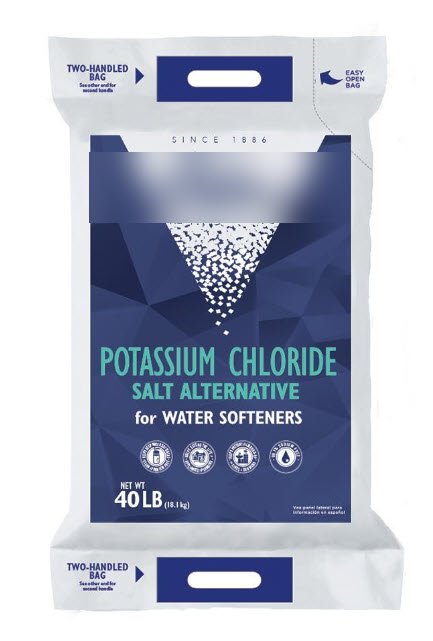
Potassium Chloride for water softeners is a low-sodium alternative to traditional water softener salts. They are made with with 99.1% pure potassium chloride, and these crystals contain low insoluble content to keep your water softener running smoothly. Potassium Chloride works in water softeners the same way that traditional water softener salt (e.g. sodium chloride) does by replacing hard water minerals through mineral ion exchange. The primary difference is that hard water minerals are replaced with potassium instead of sodium which is an essential ionic mineral in pure drinking water. This potassium chloride substitute will also help to make perfect alkaline ionizer water.


Simple Distillation is a process that involves the conversion of a liquid into vapor that is subsequently condensed back to liquid form. It is exemplified at its simplest when steam from a kettle becomes deposited as drops of distilled water is a on a cold surface. For example, if you distill sea water you can make purified drinking water because distillation will remove the majority of the salt (e.g. sodium) from the sea water. Distillation is also used to remove contaminants in water. When you heat the source water in the beaker the lower density steam rises and higher density particulates and contaminants ultra-concentrate at the bottom of the beaker and do not rise with the steam.

What system should I get with my water ionizer?

SOLUTION 1: If you have a whole house water softener and your GOAL is to have as many minerals in your source water with no additional plumbing and cost is not a problem use potassium chloride as a substitute for the sodium chloride in your water softener. Potassium Chloride is the easier solution but it’s going to be more expensive in the long run because each 40-pound bag is going to cost $30 - $40 each. You can put about 120 - 160 pounds of potassium chloride pellets in the water softener, and if you need 4 bags per month your monthly cost will be $160. Using potassium chloride will ensure your water has no addition salt added except for the salt that is naturally occurring in your source water. You do NOT need a reverse osmosis system, and your water ionizer will produce the best alkaline ionized water with the correct potential hydrogen (pH) levels infused with even more molecular hydrogen due to high mineral content (e.g. potassium, magnesium and calcium).

If you are still concerned about contaminants in your source water, and you do not have a pre-filter at or on top of your sink check out the world-class National Sanitation Foundation (NSF) certified Mutipure Aquaperform that can remove hundreds of contaminants from your source water including pharmaceuticals and microplastics.


SOLUTION 2: If you have a whole house water softener and your GOAL is to reduce the sodium and 1000+ contaminants in your water and use remineralization to add important minerals back in your water cost effectively then use a high-capacity reverse osmosis system with remineralization under your kitchen sink. You will want to use a high-capacity flow tankless RO system so the water pressure is high enough to flow water through your water ionizer quickly. You simply attach a remineralization cartridge / filter to the RO water line coming out from the RO system, and then you attach a water line to the output water line on the remineralization cartridge / filter and connect it to your clean water faucet. Once you have this done its easy to attach your water ionizer water in line to the clean water faucet head (see below).


Using this RO setup will add back in just the right amount of minerals for your water ionizer to work but the potential hydrogen (pH) levels will tend to be higher for alkaline water and lower for acidic water. For example, if you are making alkaline ionized water with the 9.5 pH setting on your water ionizer it will most likely be 10.3 - 10.75 pH. You can still drink this water, and if the higher pH causes any indigestion, it will be better to mix your alkaline ionized water with purified drinking water to reduce the pH to a level your body is used to. If you are making beauty water with the 6.0 pH setting on your water ionizer it will most likely be 3.0 - 3.8 pH. You can still use water for cleansing your face and skin hydration. In our own testing using a reverse osmosis system with remineralization has no effect on the amount of infused molecular hydrogen produced by your water ionizer when compared to source water with original minerals.

If you want to use an RO system setup you do NOT need to use potassium chloride in your water softener because the RO system will remove the potassium that was put into the water by the water softener.

What happens if I use softened water in my water ionizer?

If you use a water ionizer with softened water made with sodium chloride pellets the alkaline ionized water produced from the water ionizer will be ultra-concentrated with salt. You may not be able to taste it, but fair warning you don’t need additional salt in your alkaline ionized water because of the all the salt you get in your daily food intake. If you have high blood pressure you will be more sensitive to salt intake too. Furthermore, sodium chloride when ran through the ionization process can produce chlorine gases that are harmful to breathe and corrosive, and the added levels of sodium can also harm your water ionizer resulting in costly repairs.

2 Comments

What contaminants and chemicals are in my source water?

Comment

What contaminants and chemicals are in my source water?

< Back To All Blogs

7/5/2022

What chemicals and contaminants are in my source water?

Check the EWG TAP WATER DATABASE to check what contaminants are currently in your water for FREE using your zip code, so you understand what’s in your source water. This is an excellent way to determine if you have very hard water full of minerals, or other contaminants higher than the recommended daily limit set by the Environmental Protection Agency (EPA).

You will also learn about other source water contaminants which could cause damage to your John Ellis Living Water (LWM-5) Machine. If you decide to purchase a Living Water Machine through us, we will share all the knowledge we have about source water chemicals that can damage your machine and what kind of pre-filter you can use to get rid of those machine damaging chemicals, so you protect your investment for years to come!

Comment

Unboxing Bluevua Six Stage Reverse Osmosis System (100 GPD at 0.26L/Min Flow)

1 Comment

Unboxing Bluevua Six Stage Reverse Osmosis System (100 GPD at 0.26L/Min Flow)

< Back To All Blogs

4/29/2022

I bought this Bluevua Six Stage Reverse Osmosis System (100 GPD at 0.26L/Min Flow) to keep a constant flow of reverse osmosis (RO) re-mineralized water flowing into my John Ellis Living Water Machine (LWM-5) Distiller. This RO system does NOT have an auto shut off valve like other tankless reverse osmosis systems. The two hour auto shut off valve is inconvenient on other tankless RO systems because you have to turn it back on every two hours to keep a constant flow of water running into the John Ellis Living Water Machine. You can’t beat the price point for this RO system when you consider filtration performance for contaminant removal, mineral removal and a constant flow rate for the John Ellis Water Machine. When the reverse osmosis water storage tank is full, it also puts a good flow rate through my Kangen K8 Water Ionizer as well.

The system is packaged very well and protected during shipping.  You will notice the package care in the video below.  It was easy to get each item out of the box without having to turn the box upside down. The packaging engineer is did a fantastic job because I did not even have to turn it upside down to get the reverse osmosis system (RO) out.

Let’s first talk about the filters that come with this system.  The Coconut Carbon Block Filter (CTO) removes all the additional chlorine and organic matters from the water without releasing carbon ashes.  It must be replaced yearly.  The Granular Activated Carbon Filter (GAC) absorbs heavy chlorine, and chlorine by-products such as chloramine, THM and TCE.  It must be replaced yearly.  The Polypropylene Sediment Filter (PP) removes dirt, corrosion, sediment, red worms, sand, and other physical particles.  This is also used to protect the back filters.  The Reverse Osmosis Membrane Filter (RO) removes heavy metals, bacteria, virus, and other harmful substances. It must be replaced every two years.  The Mineral Ball filter consistently releases easily absorbed minerals, all essential to the human body, into the drinking water.  It puts calcium, magnesium, selenium, strontium, potassium, and healthy salts with other trace minerals back in the RO water.  The Mineral Ball filter must be replaced yearly.  The quality of the filters is world-class, and replacement filters are budget friendly.  When replacing the filters I love the pull forward, drop and go feature that allows any customers to change each of the filters in seconds.

Using this RO system personally has reduced the Total Dissolved Solids (TDS) of my water from 350-400 parts per million (PPM) in the tap water down to 10-20 PPM.  This is incredible performance, and I know my health is being protected when I can validate the performance myself with a basic TDS meter.  I have a water production business at home, and the quality of the water I sell has also improved. My customers are always asking me what kind of setup I have because they love the taste of the water we produce so much.  Well, this is part of our prefiltration setup, and now you know.


1 Comment

Unboxing Multipure Aquaperform + Single Hose Diverter Kit for Tap Water Filtering

1 Comment

Unboxing Multipure Aquaperform + Single Hose Diverter Kit for Tap Water Filtering

< Back To All Blogs

4/25/2022

Water filtration isn’t simply a matter of “clean” versus “dirty” water. Different contaminants have different effects. For example, chlorine in water treats bacteria and viruses, but makes the water taste like chlorine – not to mention the potential for chlorine to create harmful disinfection byproducts in the water. Water contaminants also tend to vary by region, depending on the land and any surrounding industries. Because of this, drinking water filtration is rarely a one-size-fits-all solution. 
 
Arsenic is one of those contaminants that’s not found in every region, but can be very dangerous when it is present, and very harmful when ingested. It’s naturally occurring in the ground, and it’s also used in industrial processes. But, because it’s not present in every water supply, not many countertop or under counter water filtration systems can treat arsenic in drinking water. That’s rather unfortunate, since arsenic is practically synonymous with “poisonous.” Even if it’s not immediately deadly, arsenic can still cause irritation and damage to your skin, throat, lungs, and stomach. Arsenic can even cause lung, bladder, or skin cancer.

The Multipure Aquaperform Drinking Water System uses a compact, powerful, and efficient filter that can treat a broad range of harmful contaminants, not just ones that affect the taste and smell of the water like other typical household filters. Multipure filters are much more powerful than filtered water pitchers, provide much cleaner water than bottled water (which in many cases is simply tap water), and work in real-time at the filtered water spout right on the stainless steel housing. Multipure recognized the limitations of Granulated Activated Carbon (GAC) and developed a signature solid carbon block filter by building upon the advantages of GAC to make it far more powerful and effective. By combining the right mixture of activated carbon and other filter materials, then pressing them into a densely compacted block, Multipure created a filter that allowed water to pass through but forced the water to stay in contact with enough filter surface area to vastly improve the filtration performance. Multipure has over five decades of carbon block development that have made the Aquaperform the powerhouse countertop and under the counter filtration system it is.

The Aquaperform can filter contaminants that can affect the taste, the odor, and the healthfulness of your drinking water, and the additional Arsenic V filtration puts it above and beyond the competition, protecting your home and your family’s drinking water. The Aquaperform’s performance is third-party, independently tested and certified by National Sanitation Foundation (NSF) International for the treatment of contaminants of Aesthetic Concern (Std. 42) such as chlorine, chloramine, and particulates; contaminants of Health Concern (Std. 53) such as lead, disinfection byproducts, PFOA/PFOS (aka, “forever chemicals”), and Arsenic V; and emerging compounds and incidental contaminants (Std. 401) such as artificial hormones, pest repellants, and heart medications.

  • NSF/ANSI 42 Standard refers to filters that are certified to reduce aesthetic impurities such as chlorine and taste/odor/appearance (e.g. chlorine, chloramine, particulate matter, etc). These can be point-of-use (under the sink, water pitcher, etc.) or point-of-entry (whole house) treatment systems.

  • NSF/ANSI 53 Standard refers to filters are certified to reduce a contaminant with a health effect when ingested (e.g. asbestos, lead, arsenic, PFOAs, microcystin, etc). Health effects are set in this standard as regulated by the U.S. Environmental Protection Agency (EPA) and Health Canada. Both standards 42 and 53 cover adsorption/filtration which is a process that occurs when liquid, gas or dissolved/suspended matter adheres to the surface of, or in the pores of, an adsorbent media. Carbon filters are an example of this type of product.

  • NSF/ANSI 401 Standard refers to filters that are certified for emerging contaminants removal and include both point-of-use and point-of-entry systems that have been verified to reduce one or more of 15 emerging contaminants from drinking water (e.g. prescription drugs, over-the-counter drugs, DEET, etc). These emerging contaminants can be pharmaceuticals or chemicals not yet regulated by the EPA or Health Canada whose long-term health effects are not yet fully determined.

  • NSF Protocol P231 refers to filters that are certified for the purification of microbiological contaminants (e.g. bacteria, viruses, live cysts, etc). These filters are certified for health and sanitation based on the recommendations of the EPA’s Task Force Report, Guide Standard and Protocol for Testing Microbiological Water Purifiers (1987) (Annex B).

  • Important Note: Other company water filters that are NSF certified can get the certification for filtering only for a subset of contaminants covered by the NSF certification. Many times, these filters companies aren’t even listed in the official NSF Water Filter Database. Multipure is different because they filter for EVERY SINGLE CONTAMINANT covered by the NSF certification.

Benefits of the Multipure Aquaperform Drinking Water System:

  • The Aquaperform uses Multipure's specially enhanced carbon block filter to reduce levels of deadly Arsenic V, a toxic chemical that can naturally contaminate groundwater and pose serious health risks.

  • No one likes to taste chlorine in their water, just like no one likes the taste of pool water. If you're tired of tasting chlorine and other contaminants in your drinking water, you'll love the improved taste of Aquaperform filtered water. Remember, it’s not just great for drinking water, but also gives you better-tasting coffee, tea, juice mixes, or anything else that can benefit from filtered water.

  • Food cooked with contaminated water may be unsafe to eat. Cooking with Aquaperform-filtered water means cleaner, safer water for pasta, soup, sauces, or other foods.

  • Our beloved family pets deserve cleaner, healthier water. Fill your pets’ water dishes with filtered water from Multipure's Aquaperform.

  • Don’t overpay for clean drinking water, and don’t contribute to plastic bottle waste. An Aquaperform is better for your budget and better for the environment.

  • We want you to feel as confident in your countertop or under counter water filter system system as we are. The Aquaperform is backed by our unparalleled customer satisfaction guarantee and warranty.

Features of the Multipure Aquaperform Drinking Water System:

  • The majority of water filters are only to filter contaminants down to 1 micron. The Aquaperform is able to filter contaminants down to 0.5 microns, and this guarantees greater than 99.9% contaminant removal (see filtration performance data at bottom).

  • The Aquaperform has a one gallon per minute flow rate for produced clean filtered water. The stainless steel vessel is built in such a way to ensure the tap water flows in at a rate where the tap water has enough contact time with the filter media to perform sub-micron filtration contaminant removal.

  • System does NOT remove the original minerals in your tap water or reduce the Total Dissolved Solids (TDS) of your tap water so you can consume all those healthy minerals in your water to keep your body strong.

  • Multipure Aquaperform filter is rated for 600 gallons of filtered water but has been tested up to 1200 gallons without loss of filtration integrity and performance, and replacement filters are under $200.

  • You can install the Aquaperform below your sink for under counter water filtration or attach it to your sink faucet as a countertop water filter, giving you enjoy cleaner, healthier, better-tasting water on demand.

  • Stainless steel filter housing and interior stainless steel pressure vessel both come with a lifetime warranty.

  • If you are not completely satisfied with your Multipure Drinking Water System, Multipure will refund 100% of the purchase price less shipping up to 90 days from the date of purchase.


1 Comment

Unboxing Bluevua X6-500GPD Five Stage Tankless Reverse Osmosis System

Comment

Unboxing Bluevua X6-500GPD Five Stage Tankless Reverse Osmosis System

< Back To All Blogs

4/20/2022

I bought this Bluevua X6-500GPD Five Stage Tankless Reverse Osmosis System to be able to offer to our water customers a world class RO system that produces excellent drinking water for years, so you don’t have to continue to buy bottled drinking water. We evaluate new systems, and if they pass our rigorous testing then we recommend them to our customers. This system is a high-capacity flow system can fill a cup of water in only ten seconds.

This system is elegantly designed, and hookup is absolutely streamlined. The inlet water line (white), drain line (black), and clean water line (blue) all plug into the side of the RO system, so they stay untangled when the system is completely hooked up. All parts are included for a seamless hookup in under thirty minutes. The only prerequisite for any RO system is you must have an electrical outlet under the sink to plug the RO system into. Most of the time you will have this because your garbage disposal and dishwasher need an electrical outlet too.

The system is packaged very well and protected during shipping.  All accessory parts are easily identified, and the instructions are clearly written and easy to follow so system setup can be done with ease with minimal plumbing experience.

Let us first talk about the filters that come with this system.  The Polypropylene Activated Carbon Filter (PCP) removes dirt, corrosion, sediment, chlorine, red worms, sand, organic matters, and other physical particles.  This is also used to protect the back filters, and it must be replaced yearly. The Reverse Osmosis Membrane Filter (RO) removes bacterial, virus, antibiotics and other harmful substances, heavy metals, and pesticide residues from water. It must be replaced every two years. The Carbon Filter (CF) improves the taste of the water by filtering additional chlorine, peculiar smells, and odors, and it must be replaced yearly.   The quality of these filters is world-class, and replacement filters are budget friendly.  When replacing the filters you slide the cover off the side of the RO system, pull the filter forward, turn the filter, pull the older one out, and then put it the new one and turn it into place (10 seconds to replace).

This tankless RO system comes with a water leakage protector that plugs into the back of the system. It will make a sound and alert you if there is a water leak or humidity detected in or around the area of the RO system and automatically shut off the system. There is a smart LED display with a filter life monitor and built-in real-time total dissolved solids (TDS) monitoring to track filter quality and lifespan. This is very convenient if you forget to keep track of when you first started using the filters.

Using this RO system personally has reduced the Total Dissolved Solids (TDS) of my water from 350-400 parts per million (PPM) in the tap water down to 15-25 PPM (bottled water quality).  This is incredible performance, and I know my health is being protected when I can validate the performance myself with a basic TDS meter.  I have a water production business at home, and the quality of the water I sell has also improved.

Unique features of RO system: Side panel that covers the filters is held on by magnets instead of plastic clips which can break easily.  I absolutely love this unique feature, and I outline it in the video below.

Improvements to the RO system: The only improvement I can think of is it is not clear how far forward to pull the filter when you need to replace it.  You need to be careful and pull it out slowly because the part that the filter plugs into will contact / touch the plastic top of the RO system.  Just use care when you are replacing the filters and you will have no issues.


Comment

Unboxing Bluevua RO100 ROPOT Countertop Reverse Osmosis System

1 Comment

Unboxing Bluevua RO100 ROPOT Countertop Reverse Osmosis System

< Back To All Blogs

3/6/2022

I bought this Bluevua RO100 ROPOT Countertop Reverse Osmosis System to be able to offer to our water customers a world class RO system that produces excellent drinking water for years to come. We evaluate new systems, and if they pass our rigorous testing then we recommend them to our customers. This countertop RO system is perfect for people who want clean drinking water without having to do any special plumbing under their kitchen sink. It’s the perfect size and it looks nice on your counter. It will generate a lot of interest from your friends and family that see it, and you can take pride knowing you are helping the environment by not having to constantly buy bottled water.

Let’s first talk about the filters that come with this system.  The Polypropylene Sediment Filter (PP) removes dirt, corrosion, sediment, red worms, sand, and other physical particles, and it must be replaced yearly. The Coconut Carbon Block Filter (CTO) removes all the additional chlorine and organic matters from the water without releasing carbon ashes, and it must be replaced yearly. The Reverse Osmosis Membrane Filter (RO) removes bacterial, virus, antibiotics and other harmful substances, heavy metals and pesticide residues from water, and it must be replaced every two years. The Post Carbon Filter (PCF) improves the taste of the water and has to be replaced yearly. The quality of these filters is world-class, and replacement filters are budget friendly.  When replacing the filters you pull the filter toward you from the bottom, twist, and then replace it with a new one (8 seconds to replace each filter).

The countertop RO system has three volume settings that let you know when a 1/2 liter, 1 liter, or 1.5 liters of clean reverse osmosis water has been produced. You simply fill RO tank with tap water and then push the round water-making button on the front of the machine, and it will begin the process of producing reverse osmosis water.

The first time you use the countertop system you need to clean the glass carafe and the water tank with hot water. To clean out the protective liquid in the four filters you need to fill the RO tank to the max level and run the water through the machine 4-6 times. After each time throw the water away in the carafe and repeat the process. During the first two rounds, the raw water in the tank will automatically be filled into the filters, therefore there may be no water coming out in this phase. For the first 3-5 rounds, it is normal that the pure RO water may turn black due to activated carbon particles.

Using this countertop RO system will produce you drinking water with a Total Dissolved Solids (TDS) measurement between 15-30 parts per million (ppm) depending on your water source. This TDS level is the same as excellent quality drinking water you would pay for in the store that is created in a similar way through an industrial reverse osmosis process. Using this countertop RO system, I know my health is being protected when I can validate the performance myself with a basic TDS meter.


1 Comment

Unboxing Bluevua Elegant Six Stage Reverse Osmosis System (100 GPD at 0.26L/Min Flow)

Comment

Unboxing Bluevua Elegant Six Stage Reverse Osmosis System (100 GPD at 0.26L/Min Flow)

< Back To All Blogs

2/14/2022

I bought this Bluevua Elegant Six Stage Reverse Osmosis System (100 GPD at 0.26L/Min Flow) to keep a constant flow of reverse osmosis (RO) re-mineralized water flowing into my John Ellis Living Water Machine (LWM-5) Distiller. This RO system does NOT have an auto shut off valve like other tankless reverse osmosis systems. The two hour auto shut off valve is inconvenient on other tankless RO systems because you have to turn it back on every two hours to keep a constant flow of water running into the John Ellis Living Water Machine. You can’t beat the price point for this RO system when you consider filtration performance for contaminant removal, mineral removal and a constant flow rate for the John Ellis Machine. When the reverse osmosis water storage tank is full, it also puts a good flow rate through my Kangen K8 Water Ionizer as well.

This system is elegantly designed, and hookup is absolutely streamlined compared to the regular Bluevua Six Stage Reverse Osmosis System (100 GPD at 0.26L/Min Flow) unit that you sell.  Even though they are functionally the same the setup for this unit will be so much easier for a novice individual who is setting it up for the first time. They will be able complete the installation on their own without the help of a plumber and save money in the long run.

The system is packaged very well and protected during shipping.  You will notice the package care in the video below.  It was easy to get each item out of the box without having to turn the box upside down.  The packaging engineer is did a fantastic job because I did not even have to turn it upside down to get the reverse osmosis system (RO) out.

Let’s first talk about the filters that come with this system.  The Coconut Carbon Block Filter (CTO) removes all the additional chlorine and organic matters from the water without releasing carbon ashes.  It must be replaced yearly.  The Granular Activated Carbon Filter (GAC) absorbs heavy chlorine, and chlorine by-products such as chloramine, THM and TCE.  It must be replaced yearly.  The Polypropylene Sediment Filter (PP) removes dirt, corrosion, sediment, red worms, sand, and other physical particles.  This is also used to protect the back filters.  The Reverse Osmosis Membrane Filter (RO) removes heavy metals, bacteria, virus, and other harmful substances. It must be replaced every two years.  The Mineral Ball filter consistently releases easily absorbed minerals, all essential to the human body, into the drinking water.  It puts calcium, magnesium, selenium, strontium, potassium, and healthy salts with other trace minerals back in the RO water.  The Mineral Ball filter must be replaced yearly.  The quality of the filters is world-class, and replacement filters are budget friendly.  When replacing the filters I love the pull forward, drop and go feature that allows any customers to change each of the filters in seconds.

Using this RO system personally has reduced the Total Dissolved Solids (TDS) of my water from 350-400 parts per million (PPM) in the tap water down to 10-20 PPM.  This is incredible performance, and I know my health is being protected when I can validate the performance myself with a basic TDS meter.  I have a water production business at home, and the quality of the water I sell has also improved. My customers are always asking me what kind of setup I have because they love the taste of the water we produce so much.  Well, this is part of our prefiltration setup, and now you know.


Comment

How do tank reverse osmosis systems work with the John Ellis Water Machine?

Comment

How do tank reverse osmosis systems work with the John Ellis Water Machine?

< Back To All Blogs

1/30/2022

I bought this Bluevua Six Stage Reverse Osmosis System (100 GPD at 0.26L/Min Flow) to keep a constant flow of reverse osmosis (RO) re-mineralized water flowing into my John Ellis Living Water Machine (LWM-5) Distiller.  This RO system does NOT have an auto shut off valve like other tankless reverse osmosis systems.  The two hour auto shut off valve is inconvenient on other tankless RO systems because you have to turn it back on every two hours to keep a constant flow of water running into the John Ellis Living Water Machine. You can’t beat the price point for this RO system when you consider filtration performance for contaminant removal, mineral removal and a constant flow rate for the John Ellis Machine.  When the reverse osmosis water storage tank is full, it also puts a good flow rate through my Kangen K8 Water Ionizer as well.

The filters used on the Bluevua Six Stage RO System are a reverse osmosis membrane filter, coconut carbon block filter, granular activated carbon filter, polypropylene sediment filter, and a mineral ball filter for remineralization.  Most of the filters on this unit need to be replaced between 6 months - 2 years.  You will get a lot of use out of this system for years to come you can simply contact us directly to get more filters.

The Bluevua Reverse Osmosis System comes packaged very well. The instructions are very easy to understand, and system installation is a breeze.  No parts were missing, and I was surprised how sturdy and well-built this RO system is.  The metal frame all the filters are attached to is heavy and well-constructed.  I was able to get the system setup in under 30 minutes, and 10 of those 30 minutes were spent reading through the instructions. This system comes with a one-year warranty, and it will last you for many years to come.


Comment